

AI-POWERED BIOMETRIC ACCESS CONTROL
Biometric Access Control for Critical Infrastructure
Verify the person – not just the credential.
airis:access adds real-time facial recognition to your existing access control infrastructure. Authorized employees, contractors and visitors can be identified while approaching or passing an access point — without replacing the systems already managing your doors, gates, turnstiles or security zones.
Up to 99% recognition · <500 ms decision time · Edge / On-Premise / Cloud · Retrofit-ready
Performance depends on camera positioning, lighting, enrollment quality and site conditions and is validated during the Proof of Concept.

Your Access System Knows the Credential. But Does It Know the Person?
Traditional access control systems reliably determine whether a badge, NFC token, card or PIN has permission to enter a protected area. But they usually cannot determine whether the person presenting that credential is actually the authorized user.
Cards can be shared. Credentials can be lost or stolen. Temporary staff and external contractors change frequently. Manual identity checks create delays and additional workload.
A valid credential does not automatically mean a valid identity.

Shared or Misused Credentials
Access cards, badges and PINs can be passed from one person to another without the access control system noticing.

Contractors and Temporary Personnel
Cleaning teams, maintenance companies, security providers and subcontractors frequently require temporary access to sensitive areas.

Security vs. Throughput
Stronger manual checks improve security but slow down employees, create queues and increase operational effort.
Add Identity to Your Existing Access Control System
airis:access is designed to enhance existing access control infrastructure — not replace it. Your existing system remains responsible for doors, permissions, time profiles, security zones and physical credentials. airis:access adds the missing biometric identity layer.
Credential + Identity = Stronger Access Control
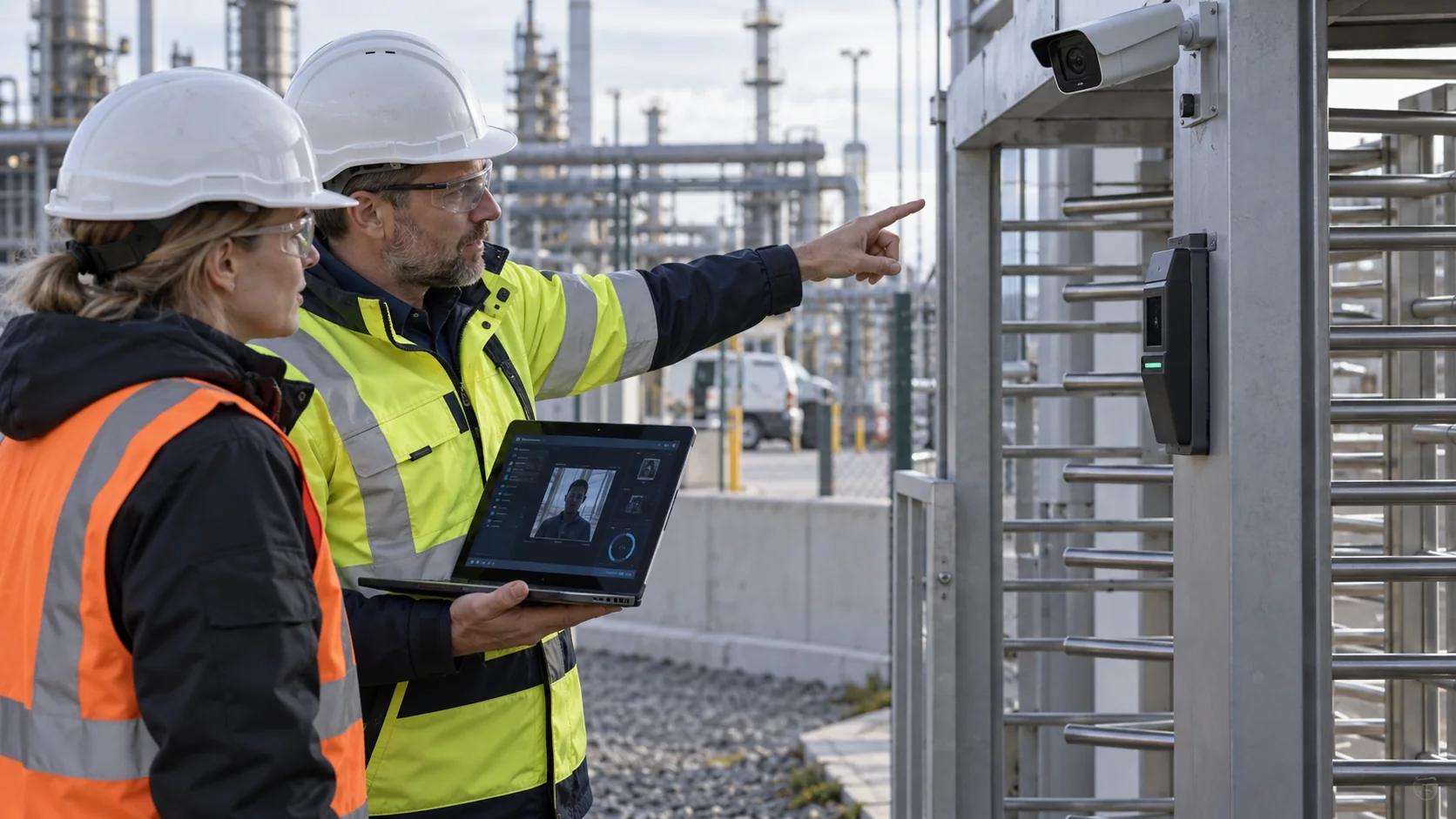
When a person approaches an access point, airis:access detects the face, performs a biometric comparison against enrolled users and generates an access event in real time. The result can be passed to the existing access control system, a turnstile, traffic light, gate, security platform or other connected system. Unknown or unauthorized persons can automatically trigger an alarm.
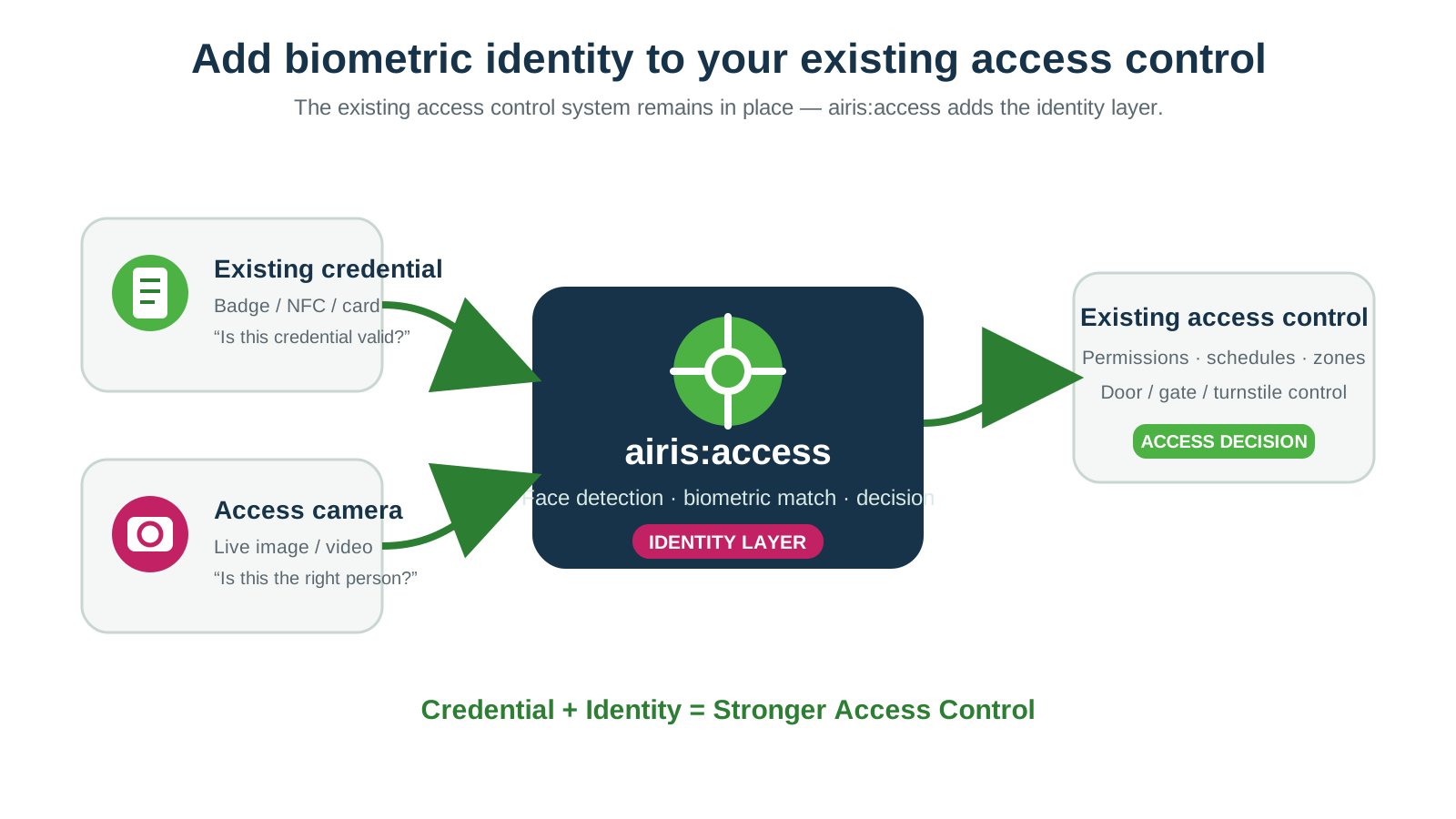
Existing credential → Biometric identity → Existing access decision
Frictionless Biometric Access in Four Steps

01 — Enroll
Authorized users are registered before access is granted. Enrollment can include basic profile information and a biometric reference image. Depending on the required security level, airis:access can additionally support identity verification using an official ID document, biometric document-to-face matching and liveness checks.

02 — Detect
A camera installed at the access point detects the approaching person. The user does not need to touch a reader or actively scan a biometric credential.

03 — Verify
airis:access compares the detected face against the enrolled user database in real time. The system determines whether the person is registered and authorized.

04 — Decide & Integrate
A verified user generates an access event that can be forwarded to the existing access control infrastructure. Unknown or unauthorized persons can trigger an alert and, where configured, visual evidence can be retained for investigation.
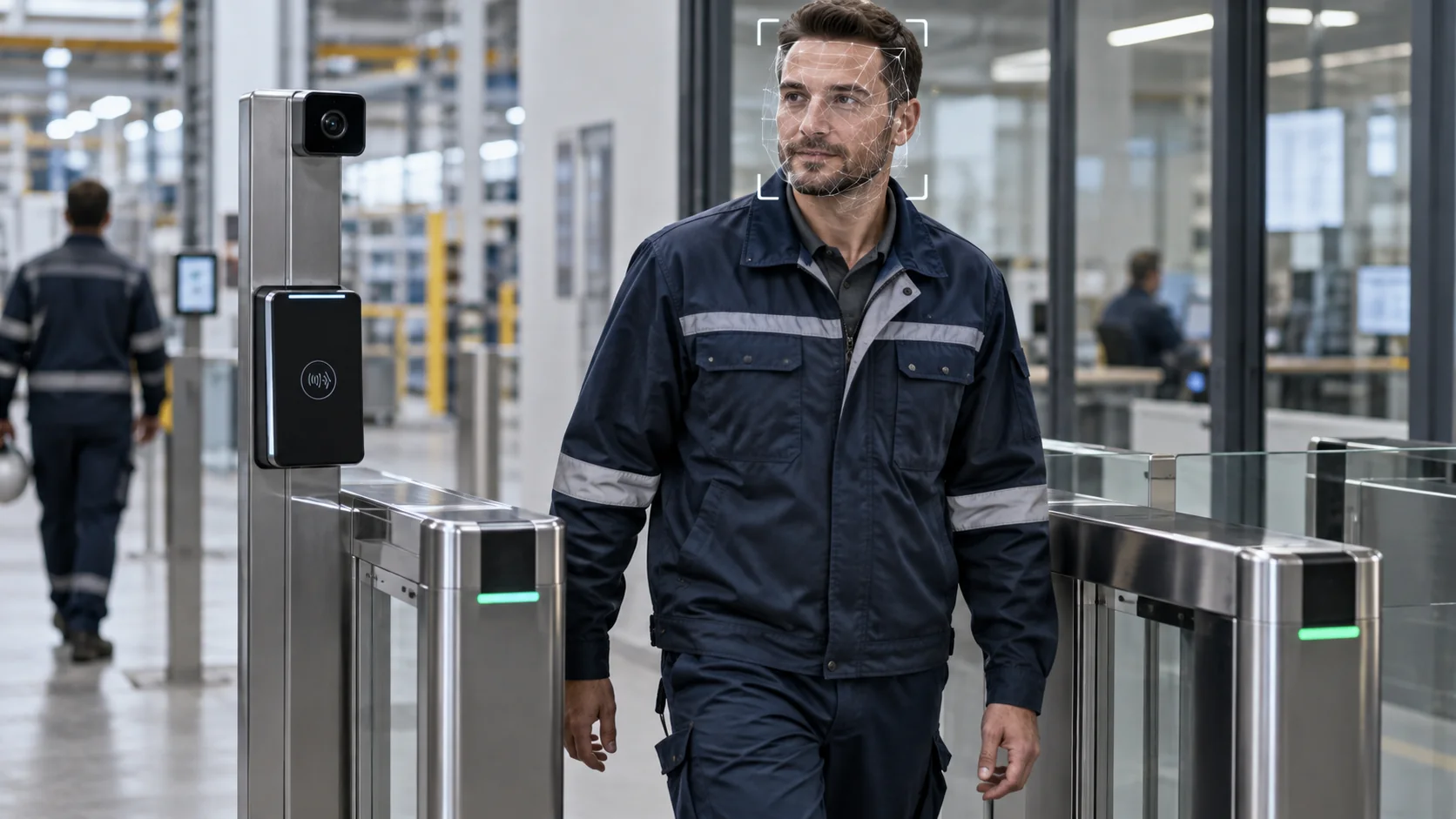
Built for High-Security Access Environments
Walk-By Facial Recognition
Identify enrolled users while they approach or pass a controlled access point without requiring a separate biometric interaction.

Real-Time Decisions
Fast biometric comparison and access decisions with target processing latency below 500 ms.
Existing System Integration
Connect airis:access to existing access control systems, gates, turnstiles, traffic lights, alarm platforms and security infrastructure.

Multi-Factor Access
Use facial recognition independently or combine it with an existing card, NFC credential or other authentication factor.

Event & Alarm Management
Generate structured events for successful identification, unknown persons and defined security exceptions.

Optional Video Evidence
Integrate with a Video Management System to document relevant security events while supporting automated privacy protection for uninvolved persons.
Edge, On-Premise or Cloud – You Decide Where the AI Runs
airis:access can be deployed according to your security, latency and data sovereignty requirements.
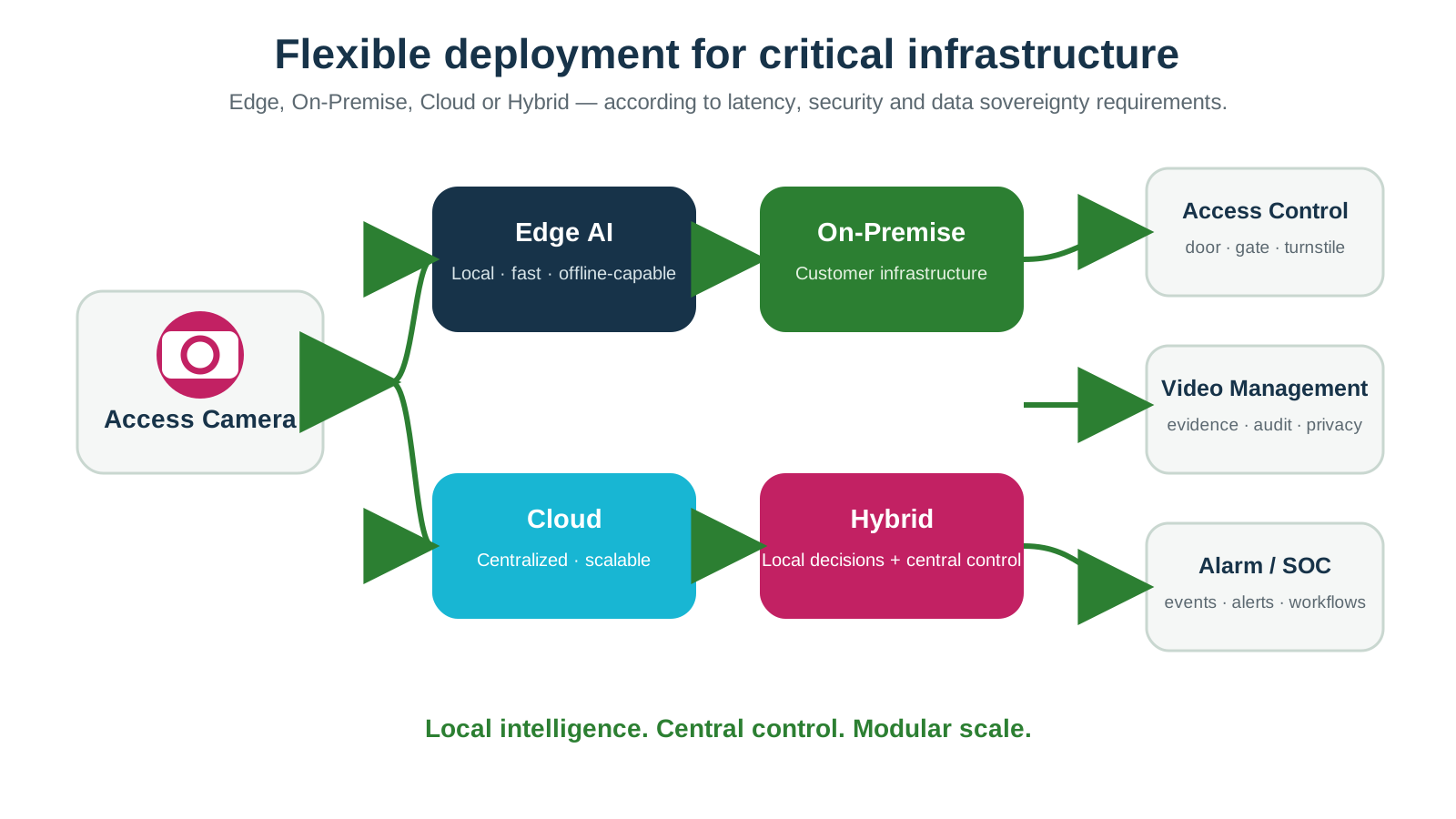

Edge
AI processing takes place directly at or close to the access point. Ideal for minimal latency, offline capability, sensitive environments and local decision making.

On-Premise
Biometric processing and user data remain within the customer's own infrastructure. Ideal for critical infrastructure, restricted networks and high data sovereignty requirements.

Cloud
Centralized AI and user management for distributed installations. Ideal for multiple sites, rapid deployment, centralized administration and scalable operations.

Hybrid
Local biometric decisions combined with centralized administration, reporting or synchronization.
Local intelligence. Central control. Modular scale.
Designed for Critical Infrastructure and Sensitive Sites
Energy & Utilities
Protect substations, power plants and other critical energy infrastructure by linking physical access rights to the actual identity of the person entering.

Chemical & Industrial Sites
Verify employees and external contractors before they enter production facilities, hazardous areas or restricted security zones.

Airports, Rail & Transport
Add biometric identity verification to existing access infrastructure without disrupting high-volume personnel flows.

Defence & Sensitive Manufacturing
Provide an additional identity layer for highly restricted facilities, production areas and sensitive operational environments.
Data Centers & Telecommunications
Ensure that authorized credentials are being used by the person they were actually issued to.

Contractors & Service Personnel
Control temporary access for cleaning personnel, maintenance providers, technicians and subcontractors with defined permissions and validity periods.
Protecting critical sites goes further than access points alone. Explore our AI-powered perimeter security and Visual AI for critical infrastructure for a complete picture of airis:net's security AI platform.
Move from Credential Control to Identity-Aware Access
| Traditional Access Control | With airis:access |
|---|---|
| Verifies a card or credential | Verifies the actual person |
| Cards can be shared | Biometric identity is linked to the user |
| Lost credentials can be misused | Identity can still be verified |
| Manual checks for sensitive areas | Automated real-time verification |
| Unknown persons may require human intervention | Unknown persons can automatically trigger an event |
| Security often adds friction | Contactless walk-by verification |
| Existing hardware investment | Existing access infrastructure can remain in place |
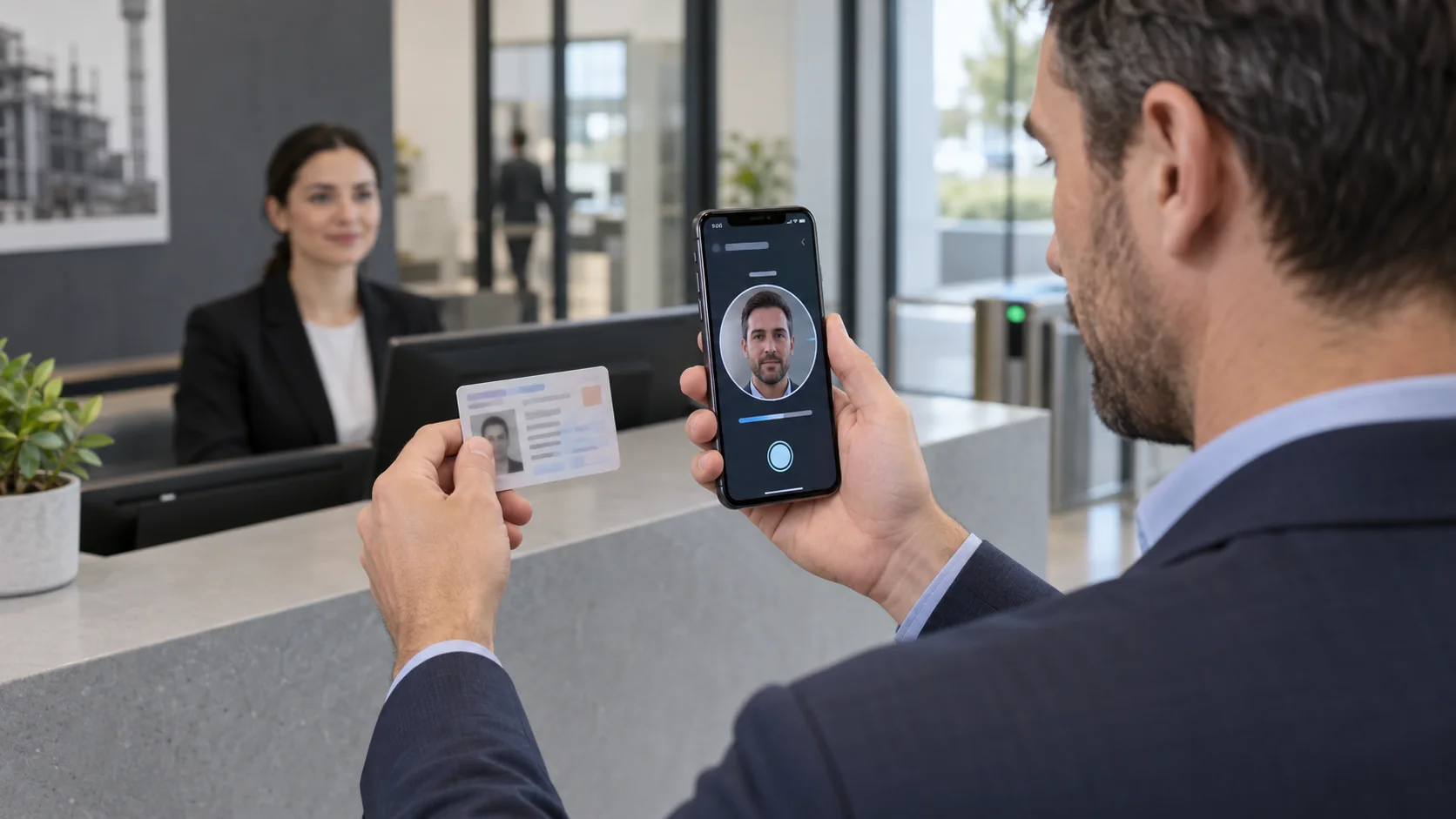
Start with a Trusted Identity
Secure access begins before the person arrives at the gate. airis:access supports configurable enrollment workflows for employees, contractors, visitors and other closed user groups.
Depending on the required assurance level, enrollment can include:
- personal and organizational information
- biometric reference image
- access role and validity period
- age estimation
- ID document capture
- document data extraction
- authenticity checks
- document-to-face biometric comparison
- liveness verification
This allows organizations to define different levels of identity assurance for different users and security zones.
Biometric Security with Data Sovereignty in Mind
Biometric access control requires more than accurate AI. It requires a deployment architecture that matches the customer’s security and privacy requirements.
airis:access supports architectures where biometric processing and user data can remain locally at the site or within the customer’s own infrastructure.
Local biometric processing
Edge or On-Premise deployment
Configurable retention policies
Event-based evidence storage

Automated anonymization of uninvolved persons
Role-based access to recorded data
Controlled synchronization between sites
Designed to support GDPR-conscious deployment architectures.
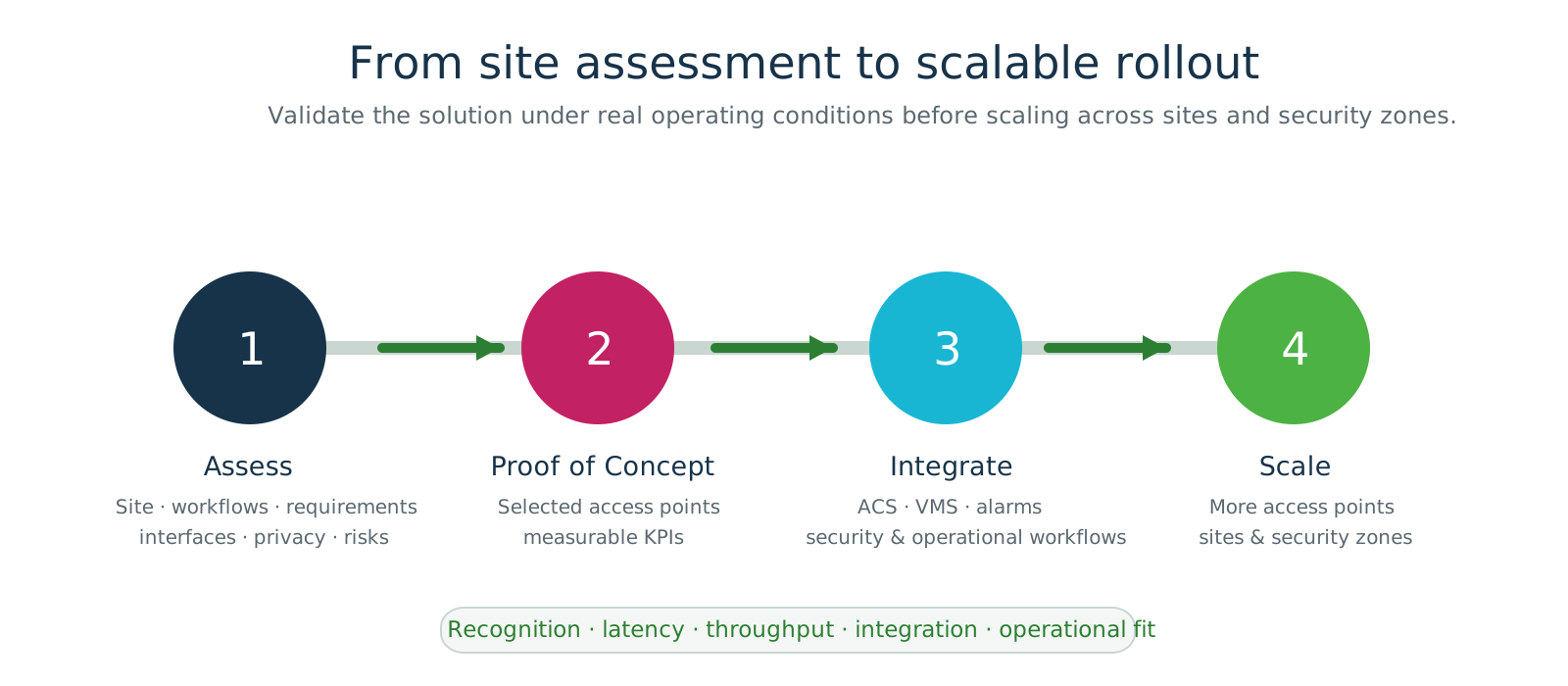
From Site Assessment to Scalable Rollout
We validate airis:access under real operating conditions before scaling across access points, security zones and sites.

1. Consulting & Assessment
We analyze your existing access control environment, security requirements, camera positions, workflows, user groups and integration interfaces.
2. Proof of Concept
A defined number of access points is equipped with airis:access. Together we validate measurable KPIs under real operating conditions.
3. Integration
The solution is connected to the customer’s existing access control, security and optional video management infrastructure.

4. Rollout & Scale
After successful validation, airis:access can be rolled out step by step across additional access points, security zones and sites.
Example PoC KPIs:
- recognition rate
- false acceptance / rejection
- decision latency
- throughput
- performance under changing lighting
- employee and contractor workflows
- system integration
Frequently Asked Questions About Biometric Access Control
What is biometric access control?
Biometric access control verifies a person's unique biometric characteristics instead of relying only on a physical credential such as a badge, access card or PIN. airis:access uses facial recognition to compare a person at an access point with previously enrolled authorized users.
Can airis:access work with an existing access control system?
Yes. airis:access is designed as an additional biometric identity layer. Existing systems can continue managing doors, permissions, credentials and security zones while airis:access verifies whether the person using the credential is actually authorized.
Does the user need to stop in front of the camera?
The system is designed for contactless recognition while a person approaches or passes an access point. Actual recognition performance depends on camera position, distance, lighting and the physical layout of the access zone.
Can facial recognition be combined with access cards?
Yes. Facial recognition can be used independently or combined with existing credentials such as cards or NFC tokens for stronger multi-factor access control.
Can airis:access run without the cloud?
Yes. Depending on the project requirements, AI processing and biometric data can be deployed at the Edge or On-Premise.
What happens if a person is not recognized?
The system can generate an unknown-person event, deny or withhold biometric confirmation, trigger an alarm and optionally provide video or image evidence to connected security systems.
Add Biometric Identity to Your Existing Access Control
You already have an access control system. airis:access adds the missing identity layer — without requiring you to rebuild your existing infrastructure.
Test the solution at a selected access point and validate recognition accuracy, latency and integration under real operating conditions.
Edge · On-Premise · Cloud · Existing ACS Integration